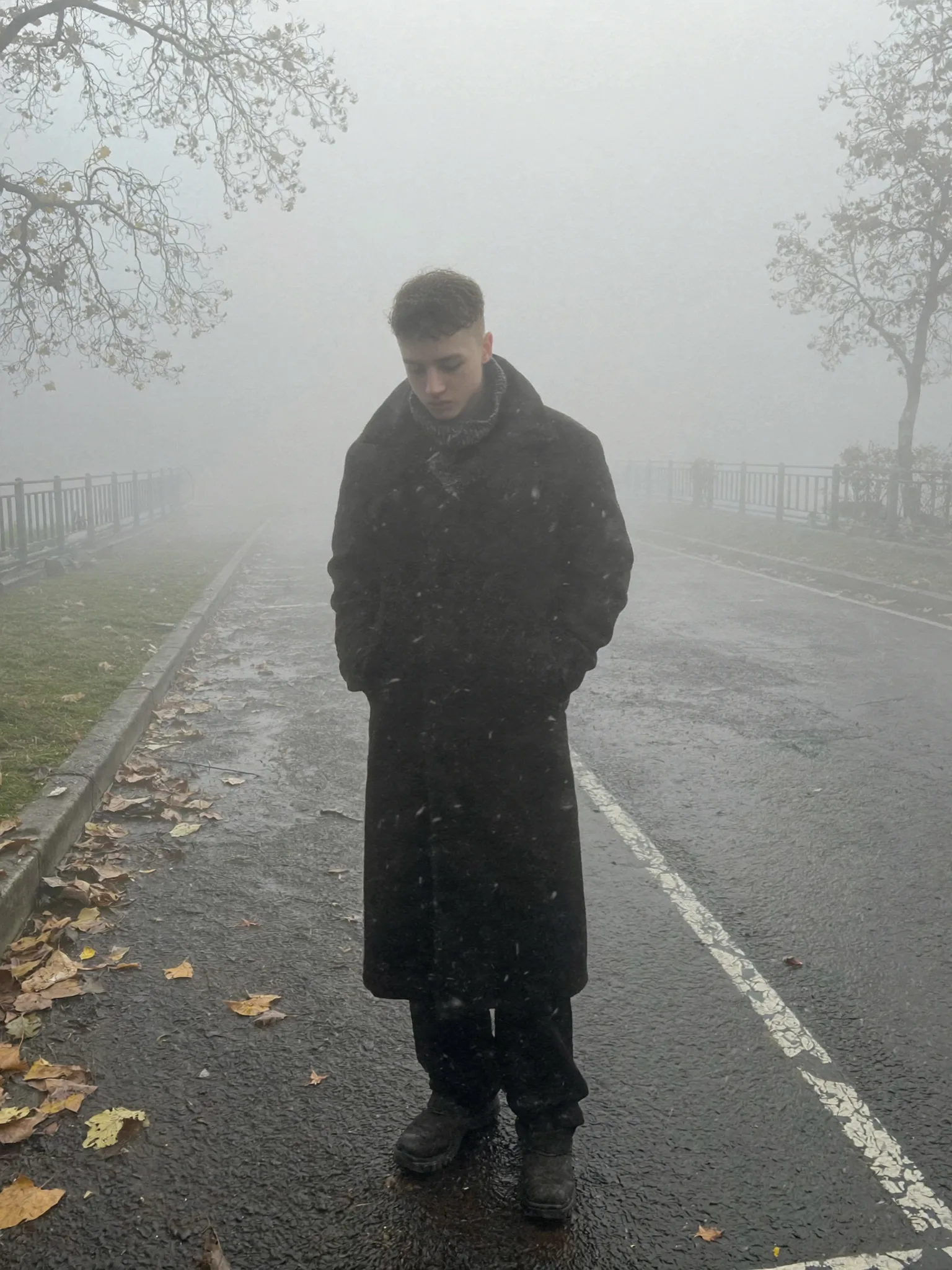
A reflection on the questions behind The Veil—what remains when everything we thought mattered falls away, and whether the smallest moments of love, mercy, and human connection are the ones that matter most.
When I began writing The Veil, I was not trying to write a film that had all the answers. In many ways, I was trying to understand the questions.
What actually matters in a human life?
We spend enormous amounts of time building things we believe are important. Careers. Homes. Plans. Reputations. Financial security. We worry about tomorrow, defend what we have accomplished, and measure ourselves against expectations that often aren't even our own. There is nothing inherently wrong with any of these things. But sooner or later, life has a way of asking a much more uncomfortable question:
If all of that disappeared, what would remain?
That question became one of the quiet forces behind The Veil.
I wanted to write about ordinary people rather than extraordinary ones. People carrying grief. People who have failed. People who have been forgotten. People trying to survive another day without necessarily understanding what that day means. They aren't theologians trying to explain God to one another. Most of the time, they are simply trying to live.
And yet, somewhere inside those ordinary lives, something extraordinary may be happening.
The older I get, the more I find myself thinking about how little we actually see of another person's life. We encounter someone for five minutes and have no idea what brought him to that moment. We pass a stranger on the street without knowing that he may be standing at the most important crossroads of his life. A small kindness that costs us almost nothing may arrive at precisely the moment another person desperately needs it.
We rarely get to see the whole picture.
That idea fascinates me.
It also lies very close to my understanding of faith.
Faith, to me, is not pretending that suffering isn't real. Christianity certainly doesn't make that claim. At its center is a cross. Loss, abandonment, injustice and death are not removed from the story. They are walked through.
But the cross also makes an astonishing claim: what appears to be the end of something may not be the end at all.
That became important while writing The Veil.
I began thinking about the invisible architecture of our lives—the people we meet, the people we lose, the doors that close, the unexpected ones that open, and those strange moments when something seemingly insignificant changes the direction of everything that follows.
We call some of these things coincidence.
Perhaps some of them are.
But what if we could see farther?
What if, for just a moment, the veil were pulled aside and we could see how one life had touched another? How something that appeared wasted wasn't wasted at all? How an act of mercy traveled farther than the person who offered it could ever know?
That is the territory I wanted the film to inhabit.
Not by preaching an answer, but by allowing people to live inside the question.
Dante's journey became especially important to me because grief has a way of stripping life down to its foundations. When someone or something we love is taken away, many of the things that once seemed urgent suddenly look strangely small. We are left facing questions that success cannot answer.
What was all of this for?
Who did I love?
Who loved me?
Whose burden did I make lighter?
What did I build that actually mattered?
And perhaps the most difficult question:
Was I paying attention while my life was happening?
That may be one of the deepest currents running through The Veil.
The film contains grief, but I don't think it is ultimately a story about grief. It contains faith, but I don't think its purpose is to lecture anyone about faith. It contains broken people, but it isn't interested in dividing them neatly into the redeemed and the irredeemable.
It is about people discovering, sometimes without realizing it, that they matter to one another.
That a human being can become shelter for another human being.
That dignity can be restored.
That forgiveness can travel in directions we never expected.
That sometimes we build a house while something else is quietly rebuilding us.
And that perhaps God is present not only in the moments we recognize as miraculous, but in the ordinary ones we almost overlook.
A conversation.
A meal.
A hand held for a few seconds.
A child waiting at a window.
A stranger being allowed through a door.
These things look small.
But perhaps we have our measurements wrong.
I don't know that a film should tell an audience exactly what to think about such things. I would rather leave enough room for people to bring their own lives into the theater with them.
If someone finishes The Veil and thinks about a person they have forgotten, someone they should forgive, someone they should call, or simply looks differently at the person sitting beside them, then the story has reached the place I hoped it might reach.
Because after writing it, I keep returning to the same thought:
Maybe the things that matter most in life are not the things we accumulate or accomplish.
Maybe they are the things that pass through us and into someone else.
And perhaps we will never fully understand how much they mattered until we finally see beyond the veil.